



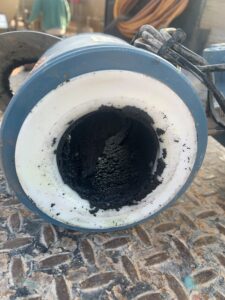
If you’re operating in the Permian Basin, you already know about the problem with paraffin and other buildup. As crude oil moves from reservoir to surface, temperature and pressure drop causing paraffin and other foulants to precipitate out of solution and deposit on every metal surface in its path — including the instruments you depend on for accurate measurement.
Magnetic flow meters, turbine meters, Coriolis meters, orifice plates, and valves are all vulnerable. And in the Permian, where production volumes are high and measurement accuracy directly impacts revenue, fouled instrumentation isn’t just an annoyance — it’s a significant maintenance expense and financial problem.




The Real Cost of Fouling in the Permian
Operators across West Texas and Southeast New Mexico deal with paraffin and other types of fouling year-round, but the problem intensifies in cooler months when the wax appearance temperature (WAT) is more easily reached in surface equipment and gathering lines.
Here’s what that typically looks like in practice:
Lost measurement accuracy. Paraffin and other forms of buildup on mag meter electrodes interfere with the voltage signal that determines flow rate. Tubes in Coriolis meters do not oscillate at the designed frequency. Turbines do not spin freely. Even a thin film can introduce measurement drift. Thicker deposits cause erratic readings, making it impossible to trust custody transfer numbers or allocations.
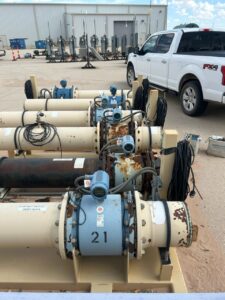
Frequent meter pulls. Many operators are pulling meters every 30 to 60 days for cleaning — sometimes more often. Each pull means shutting down flow, dispatching a service crew, disassembling the meter, scraping or chemically stripping deposits, reassembling, and re-proving. A single cleaning event can cost thousands of dollars in direct expense, and that doesn’t count the lost production during downtime.
Compounding costs. The more frequently you clean, the more you spend — and the cycle tends to accelerate. Aggressive cleaning can damage liner surfaces and mechanical integrity over time, creating rougher surfaces that actually promote faster re-fouling.
Prover failures. Fouling doesn’t just affect meters. Provers — the instruments used to verify meter accuracy — are equally susceptible. Contaminants build on rails and shafts, leading to damaged seals. Replacing seal shafts is a major expense. One South Texas operator estimated savings of over $100,000 for each prover cleaning cycle they were able to eliminate.
Why Traditional Methods Fall Short
Hot oiling and mechanical scraping address the symptom (existing deposits) but not the cause (why deposits adhere to the surface). Foulants keep coming back because the metal surface itself naturally attracts buildup, its surface energy allows foulants to bond and accumulate.
Increasing cleaning frequency is the most common response, but it’s a losing strategy. You’re spending more money to fight the same battle, and each cleaning cycle causes additional wear to equipment.
How Our Treatment Solutions Change the Equation
e9 Treatments takes a fundamentally different approach: instead of removing deposits, our treatment solutions help keep deposits off the surface of valuable assets.
e9’s Treatment Solutions lower the surface energy of treated metal, ceramic, and polymer surfaces at the molecular level. Once applied, the treated surface becomes both hydrophobic and oleophobic — meaning it actively repels both water-born and oil-born substances, including paraffin, iron sulfide, scale and other foulants.
What Permian Basin Operators Are Seeing
Maintenance cycles extended 3x to 8x. Meters that required monthly cleaning are running three to eight times longer between service, depending on the severity of the operating environment. That’s a dramatic reduction in service calls, truck rolls, and production interruptions.
Electrodes staying clean. In shale oil and produced water applications known for heavy paraffin deposition, operators have verified that e9’s Treatment Solutions for Mag Meters helps treated electrodes remain in specification, helping to avoid shutdowns related to fouling and loss of measurement accuracy.
Provers staying reliable. Operators have reported problem-free operation since treating with e9 Treatment Solutions for Provers allowing them to continue to run without failure or expense due to lost seals.
Fast, non-disruptive solutions. Our treatment solutions do not alter tolerances, electrical properties, or calibration. Meters can be treated during a scheduled proving or cleaning and returned to service almost immediately. Application can be done in the field or at an e9 Treatment Facility.
Integrating e9 Into Your Permian Basin Operations
The most common approach is to integrate e9 treatment into your capital equipment ordering process, your planned maintenance workflow, or you corrective action plan in the field:
- On new equipment: Treat new meters before they go into service. Starting with a treated surface from day one means you may be able to realize the benefits of a like new surface for much longer intervals and significantly reduce the fouling-driven maintenance cycle.
- During scheduled cleaning: When a meter comes is planned for service, have it cleaned and treated with e9 before reinstallation.
- Through service partners: e9 works with a network of service providers who can apply treatments as part of their standard cleaning, proving, and/or calibration services.
The Bottom Line for Permian Operators
You can keep fighting paraffin the old way — more cleaning, more downtime, more cost — or you can change the surface and change the outcome.
e9 Treatments currently protects over 100,000 treated assets globally, with a strong and growing presence in the Permian Basin and other major U.S. producing regions. Operators who have adopted the technology consistently report lower maintenance costs, better measurement accuracy, and equipment that simply runs longer between service intervals.
Ready to stop fighting fouling and buildup? Contact the e9 Treatments team to discuss your specific Permian Basin application.